

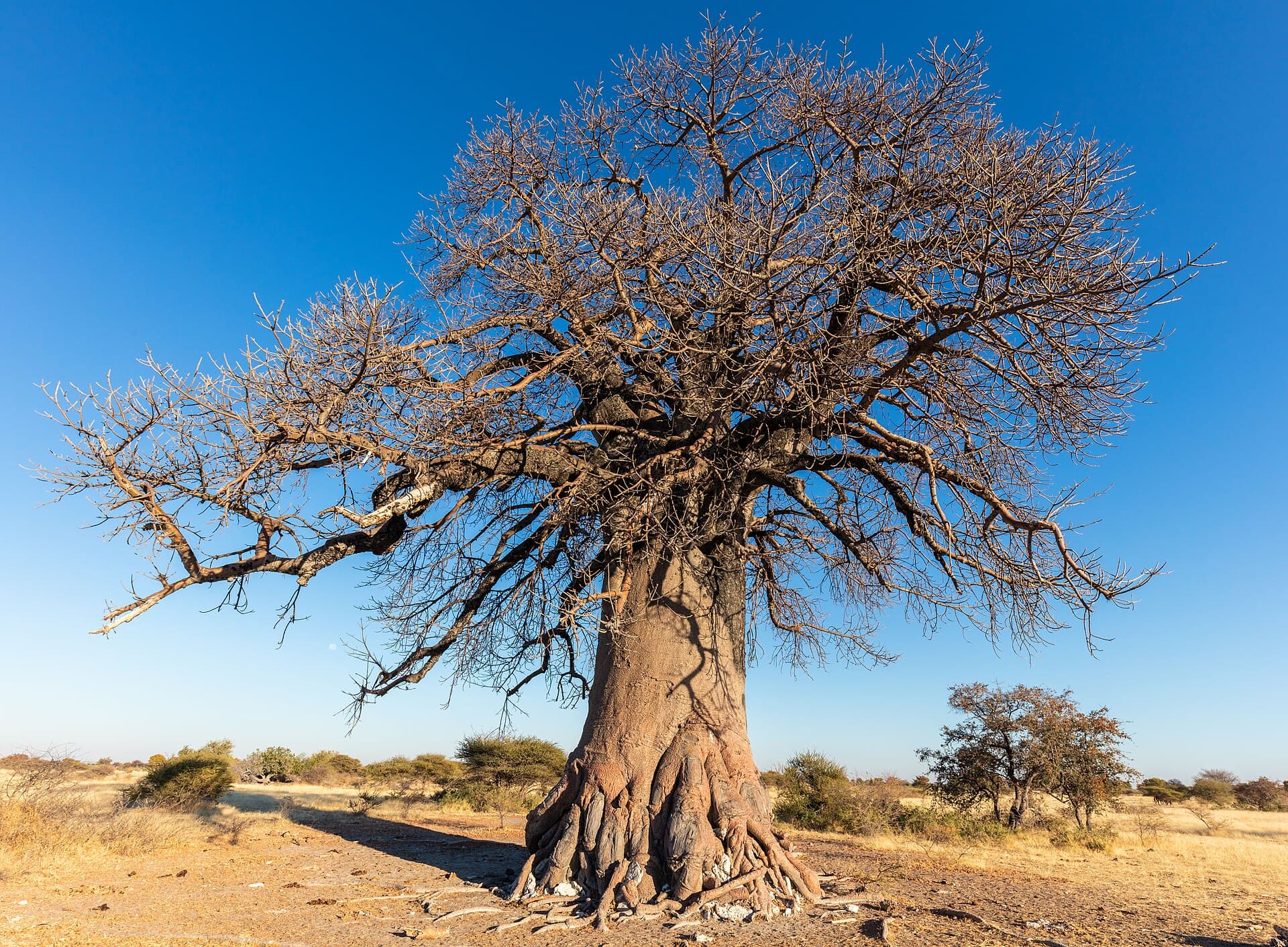
Photos: Diego Delso, CC BY-SA 4.0, via Wikimedia Commons.
Makgadikgadi Pans
Sua and Ntwetwe pans, dry-season zebra on the Boteti, and baobabs on the edge of the Kalahari.
- Region
- Northeastern Botswana, between Nata and Maun
- Getting there
- Maun Airport (MUB), then a road transfer toward the Boteti River or Gweta
- Known for
- Salt pans of a former lake
Why travel to Makgadikgadi Pans
"The pans are what a lake leaves behind: salt, sky, and a horizon with nothing on it."
After rain, shallow water on the pans can draw flamingos. Grassland islands between the salt hold meerkats, and baobabs stand on the higher ground, including around Gweta on the northern edge of Ntwetwe. Gweta sits on the road between Nata and Maun. This is open Kalahari country, a different journey from the river safaris at Chobe.
Our operations desk in Victoria Falls handles transfers, permits and border crossings into Makgadikgadi Pans.
Talk to the deskDon't leave Makgadikgadi Pans without
The landmarks and experiences that define Makgadikgadi Pans.
Questions, answered
Planning a trip to Makgadikgadi Pans?
Tell us your dates and travel style. Our team in Victoria Falls will put together a route, camps and transfers that work for you.
In northeastern Botswana, between Nata and Maun. The national park is the western portion, along the Boteti River. Gweta is the town most travellers use for the northern pans.
Fly into Maun (MUB) and continue by road, or drive the Nata–Maun road, which passes Gweta. It is a separate journey from Victoria Falls and Chobe, often added between Maun and Kasane.
May to October is the dry season, when zebra are on the Boteti and the pans are firm underfoot. In the rainy months the pans can flood and flamingos arrive, and some tracks are slow or closed. Camps on the pans publish their own open seasons.
Where a camp offers a meerkat visit, go with their guide and keep the distance the animals accept. Do not feed them. Zambezi Thunder strictly partners with operators dedicated to community empowerment, low-impact carbon footprinting, and long-term wildlife protection.