

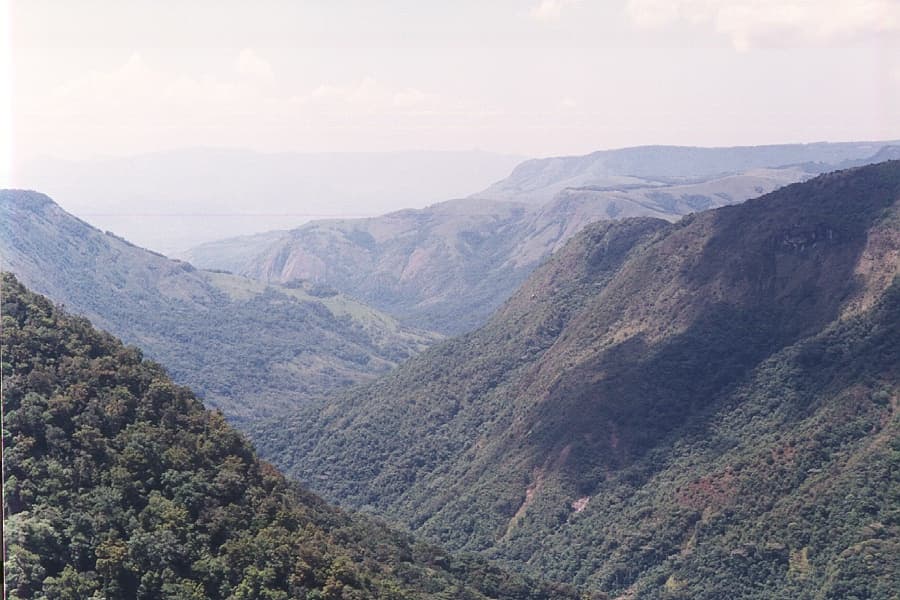
Pungwe gorges photograph: public domain, via Wikimedia Commons. Mutarazi Falls: Seabifar, CC BY-SA 4.0, via Wikimedia Commons.
Eastern Highlands
Nyanga, the Bvumba, and Chimanimani — Zimbabwe’s highest country, cooler than the safari lowveld.
- Region
- Manicaland, along the Mozambique border
- Getting there
- Robert Gabriel Mugabe International Airport, Harare (HRE), then a road transfer via Mutare
- Known for
- Mountains and waterfalls
Why travel to Eastern Highlands
"Above the escarpment the air changes. Forest, grass, and falling water replace the thornbush."
This is mountain country, cooler and wetter than Victoria Falls or Hwange. Mount Nyangani, in Nyanga, is Zimbabwe’s highest mountain. The highlands are known for montane grassland and forest, hiking trails, birdlife, trout streams, and waterfalls. Mutarazi Falls drops into the Honde Valley on the edge of Nyanga National Park.
Our operations desk in Victoria Falls handles transfers, permits and border crossings into Eastern Highlands.
Talk to the deskDon't leave Eastern Highlands without
The landmarks and experiences that define Eastern Highlands.
Questions, answered
Planning a trip to Eastern Highlands?
Tell us your dates and travel style. Our team in Victoria Falls will put together a route, camps and transfers that work for you.
Nyanga, the Bvumba (Vumba), and Chimanimani. They sit in Manicaland, along the border with Mozambique, and are usually reached via Mutare or by road from Harare.
Most international trips connect through Harare’s Robert Gabriel Mugabe International Airport, then continue by road. Mutare is the regional town for the Bvumba and the road toward Nyanga and Chimanimani. This is not a day trip from Victoria Falls.
The highlands can be visited year-round. May to August is cooler and clearer for hiking. Waterfalls, including Mutarazi, carry more water in the rainy months. Mountain weather can change in a day, so a warm layer is worth packing even in summer.
Stay on marked paths near waterfalls and cliff edges, and give way to local walkers on the Chimanimani trails. Zambezi Thunder strictly partners with operators dedicated to community empowerment, low-impact carbon footprinting, and long-term wildlife protection.